


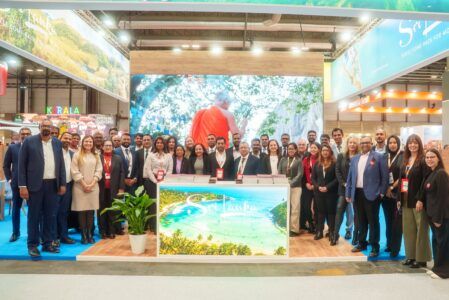
Sri Lanka has stepped confidently into 2026, welcoming the new year with record arrival numbers that signal a destination firmly re-establishing itself on the global travel map. Early performance indicators suggest that the current winter season could be one of the strongest since 2018, bringing renewed optimism to an industry that has worked tirelessly to rebuild demand, diversify source markets, and refine the visitor experience after several challenging years.
This upward momentum was clearly reflected at FITUR Madrid 2026, one of the world’s leading travel trade exhibitions, where Sri Lanka maintained a visible and engaged presence among global tourism stakeholders. For Sri Lanka Tourism, FITUR served not only as a promotional platform but as a strategic checkpoint—reinforcing confidence in the destination while deepening engagement with a European market that continues to show consistent, long-term promise.
Spain has quietly but steadily emerged as one of Sri Lanka’s most reliable growth markets in Europe. Unlike markets driven by short-term trends, Spanish outbound travel to Sri Lanka has demonstrated resilience and maturity, underpinned by travellers seeking authentic, experience-rich destinations. Increasingly, Spanish travellers are drawn to Sri Lanka’s blend of culture, nature, wellness, wildlife, gastronomy, and slow travel—elements that align closely with evolving European travel preferences.
At FITUR, Sri Lanka’s messaging from 34 participating organizations focused on clearly articulated strengths. From ancient cultural sites and tea country landscapes to wildlife encounters, coastal escapes, and community-based tourism, the destination positioned itself as a place of depth rather than volume. Trade conversations reflected growing interest in multi-experience itineraries, longer stays, and repeat travel—key indicators of a market transitioning from discovery to familiarity.
Industry stakeholders also highlighted the importance of sustained market engagement. Spain’s value lies not only in visitor numbers but in traveller profile, with many visitors seeking curated, meaningful journeys rather than mass-market products. This aligns well with Sri Lanka’s broader tourism ambition to attract higher-spend travellers while dispersing benefits across regions and communities. FITUR provided an ideal platform to reinforce this positioning, particularly among tour operators, travel designers, and long-haul specialists.
While trade engagement at FITUR was encouraging, it also underscored the broader need for a strong, unified destination marketing campaign to support these efforts. Trade platforms can open doors, but sustained demand requires strategic, consumer-facing communication that consistently reinforces Sri Lanka’s value proposition across seasons and markets.
As Sri Lanka continues its upward trajectory in 2026, FITUR Madrid stands as a reminder that recovery alone is not the goal—strategic growth is. With Spain proving to be one of the steadiest emerging markets for the destination, continued presence, consistent messaging, and long-term relationship building will be key. In doing so, Sri Lanka is not just returning to the global tourism stage, but reaffirming its place as a destination of substance, diversity, and enduring appeal.

 Read more
 Read more
 Read more
 Read more
 Read more
 Read more
 Read more
 Read more
 Read more
 Read more