


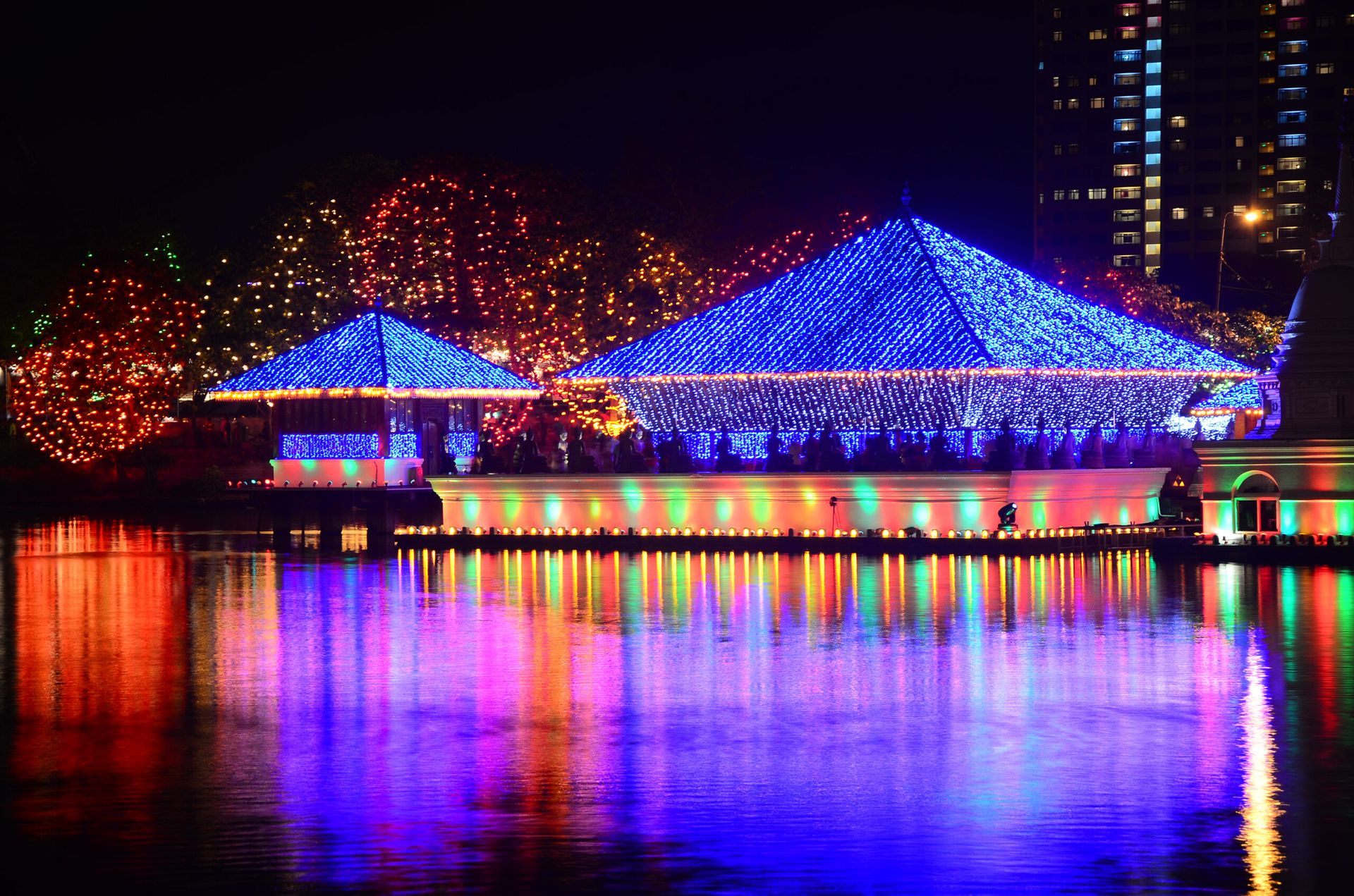
Once a year, Sri Lanka is transformed as the streets glow with hand-crafted lanterns, temples fill with the scent of incense and frangipani, and an entire nation pauses to honour the life of the Buddha. Vesak is not merely a public holiday — it is the soul of the island, luminous and ancient.
Vesak — known formally as Vesak Poya, falls on the full moon of the month of Vesak, typically in May. It is considered the most sacred day in Buddhism, commemorating not one but three pivotal moments in the life of Siddhartha Gautama: his birth, his attainment of enlightenment, and his passing into Nirvana. That all three events are said to have occurred on the same full moon day gives Vesak a profound spiritual weight unlike any other observance in the Buddhist world.
Sri Lanka’s connection to Buddhism stretches back more than two thousand years. According to the Mahavamsa, the island’s great ancient chronicle, Buddhism was brought to Sri Lanka in the 3rd century BCE by Arahat Mahinda, son of the Indian Emperor Ashoka, during the reign of King Devanampiya Tissa. That introduction planted a seed that has shaped every dimension of Sri Lankan identity, culture, architecture and daily life ever since. Today, Sri Lanka is home to one of the oldest continuous Buddhist traditions in the world, and Vesak remains its most visible and deeply felt expression.
What distinguishes Vesak in Sri Lanka from almost any other religious observance in the world is the manner in which an entire nation participates, not merely the devout, but communities of all faiths, backgrounds and walks of life.
The lanterns are perhaps the most iconic symbol of the season. In the weeks leading up to Vesak, homes, temples and streets across the country are adorned with Vesak koodu — intricately crafted paper lanterns in every conceivable shape and size. From simple geometric forms to elaborate representations of the lotus flower, the Dhamma wheel and the Bo tree, these lanterns are often made by hand, passed down through families as a treasured tradition.
Vesak pandols, or thoranas, are another defining feature of the Sri Lankan celebration. These enormous illuminated structures, often several storeys high, are erected in towns and city neighbourhoods by community groups who spend months planning and constructing them. Each pandol depicts scenes from the Jataka tales, the stories of the Buddha’s previous lives brought to vivid life through thousands of electric bulbs and, increasingly, LED artistry. Crowds gather through the night to walk between pandols, which in larger cities can number in the dozens.
Dansalas — free food and drink stalls set up along roadsides — speak to the spirit of dana, or generosity, that lies at the heart of the Vesak message. Anyone may stop, regardless of religion or background, and be offered a meal, a cup of tea, a cold drink or a sweet. It is perhaps the most quietly powerful expression of the festival: the act of giving, freely and without expectation.
Sri Lanka declares a two-day public holiday for Vesak, and the transformation of daily life is total. This pause is itself meaningful. In a world of relentless noise and movement, Vesak offers a moment of collective stillness, an invitation regardless of belief, to reflect on impermanence, compassion and the possibility of a more considered way of living.
For travellers fortunate enough to be in Sri Lanka during Vesak, the experience is one that leaves a lasting impression. The country asks only that visitors observe the spirit of the occasion, dress modestly when visiting temples, be respectful of the atmosphere of reflection that pervades public spaces, and accept, if offered, the hospitality of a dansala with the gracious simplicity in which it is given.
To walk the streets of Colombo, Kandy, or Galle on a Vesak night — past glowing lanterns and towering pandols, families seated on temple steps, and children carrying handmade lights — is to witness something rare: a nation at peace with itself, illuminated from within.
 Read more
 Read more
 Read more
 Read more
 Read more
 Read more
 Read more
 Read more
 Read more
 Read more