Surfing in Sri Lanka: A Season-and-Coast Guide for Intermediate to Advanced Surfers
Adventure . Beach Adventure . Beach
Sri Lanka runs on two surf seasons, not one. The southwest monsoon that brings clean swell to the east coast from around May to September reverses from November to April, handing the south coast its turn instead. Between the two, there’s surf somewhere on the island every month of the year.
What matters more once you’re past beginner breaks is which specific set-up suits your level, which month gets you the best conditions without the worst crowds, and how the logistics of switching coasts actually work. This guide skips the beginner basics and goes straight into that.
Key Takeaways
- The south and east coasts run on opposite seasons, so Sri Lanka has surf somewhere year-round.
- Arugam Bay’s Main Point is the signature advanced break, but its best months are also its most crowded.
- The south coast has genuine intermediate and advanced terrain beyond the beginner breaks, at Ahangama, Midigama and Hikkaduwa.
- Shoulder months trade some wave size for a far better crowd-to-wave ratio.
- Getting between coasts for the seasonal switch is worth planning around, not an afterthought.
Which Coast Is Best for Surfing in Sri Lanka?
For intermediate and advanced surfers, the south coast is the stronger choice from roughly November to April, while the east coast, centred on Arugam Bay, takes over from around May through October. Here’s how the two compare:
| South Coast | East Coast | |
| Season | November to April | April/May to October |
| Signature break | Hikkaduwa Main Reef | Arugam Bay Main Point |
| Break type | Reef and point breaks | Long right-hand point break |
| Best for | Intermediate to advanced | Intermediate to advanced, with quieter options nearby |
| Water temperature | 27-29°C year-round | 27-29°C year-round |
Where Should Intermediate and Advanced Surfers Surf on Sri Lanka’s South Coast?
Weligama gets most of the attention as Sri Lanka’s beginner hub, gentle breaks, a sandy bottom, and surf schools on every corner. It’s covered well in our guide to adventure activities in Sri Lanka if that’s the level you’re after. However, this is not where the south coast’s more experienced surfers spend their time.
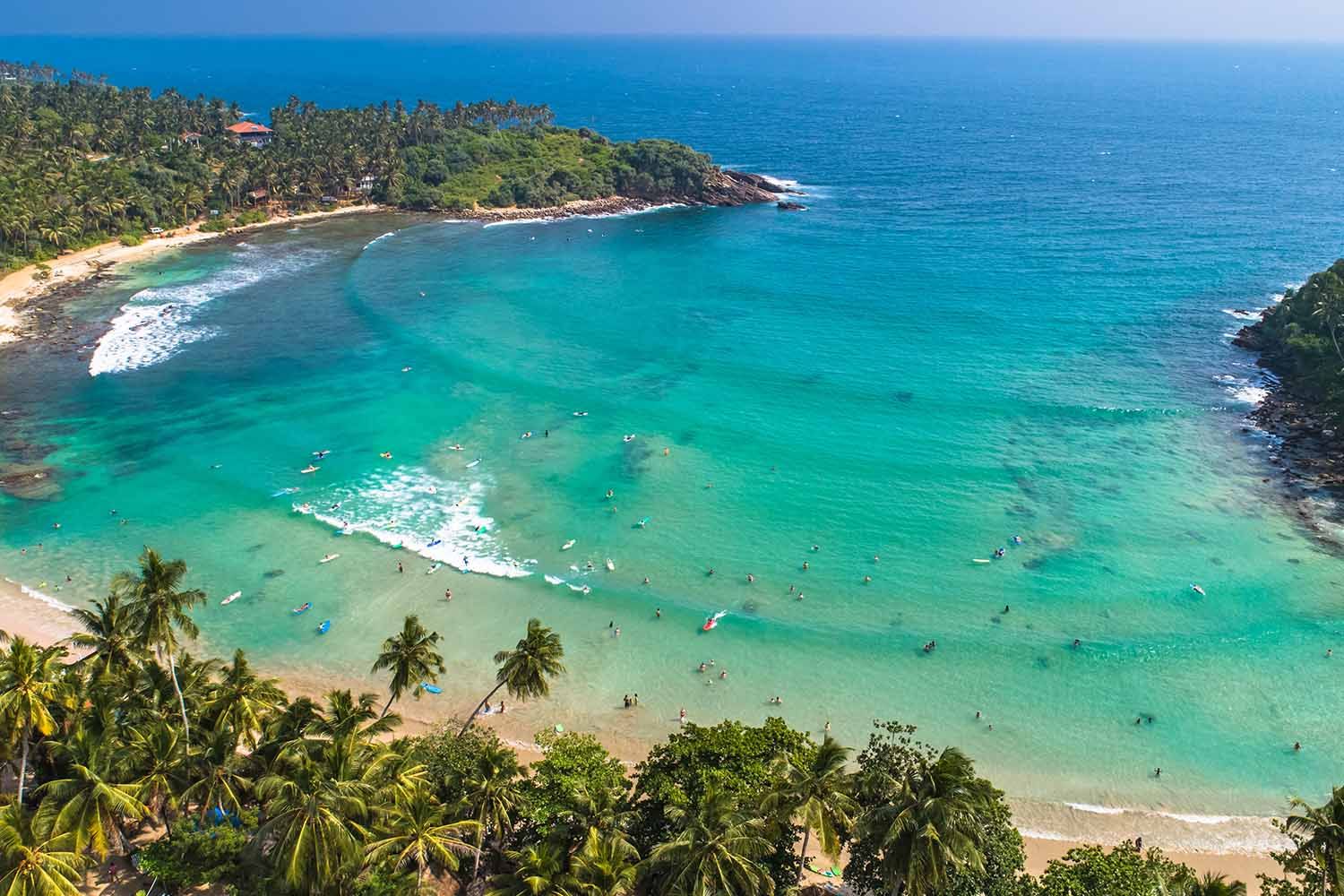
- Ahangama: proper reef breaks that reward experience, punchier and less forgiving than Weligama’s rollers, with a couple of set-ups that hold a clean face well past head height on a good swell.
- Midigama: a similar step up, with a handful of reef set-ups close enough together to session more than one in a day depending on tide and wind direction.
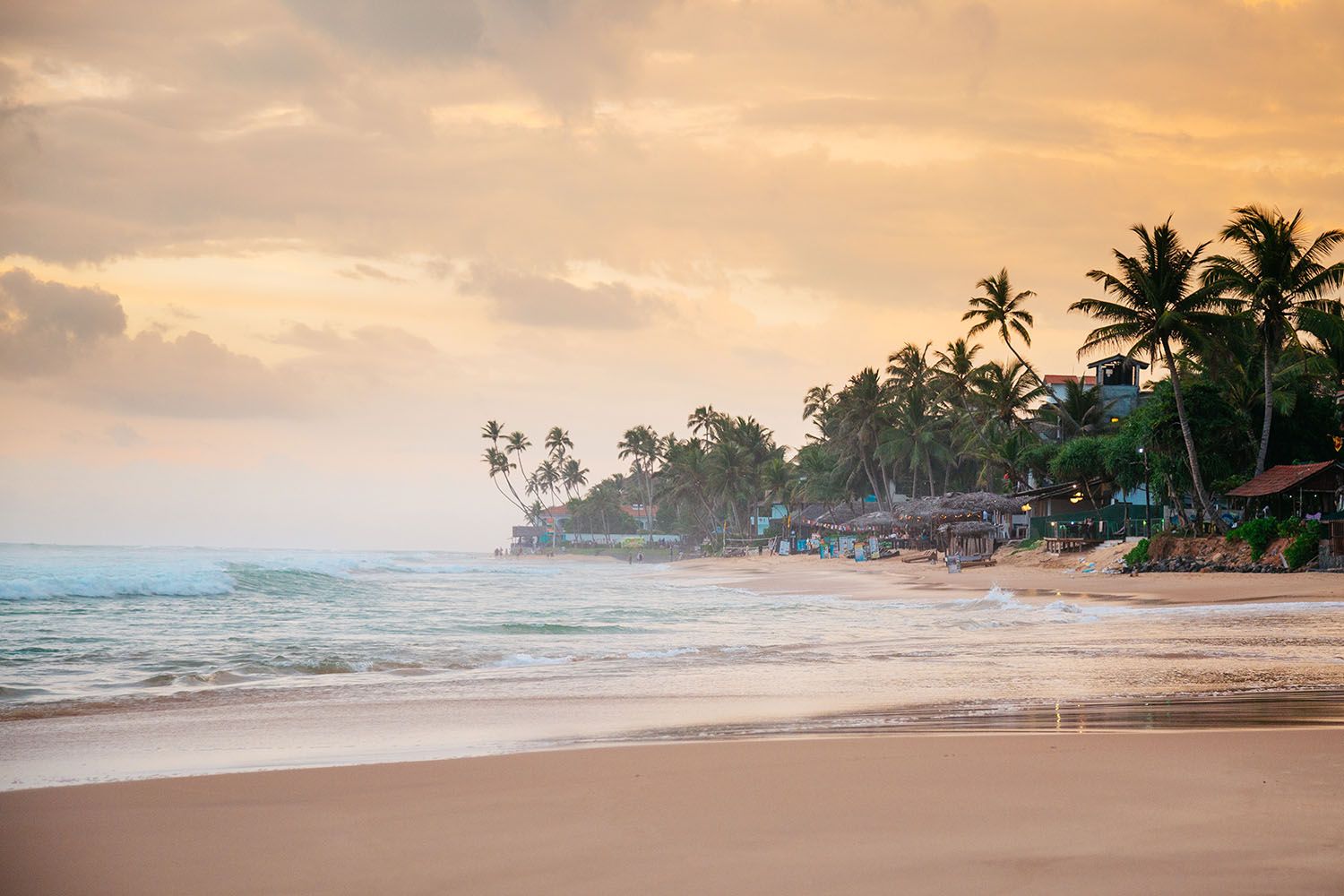
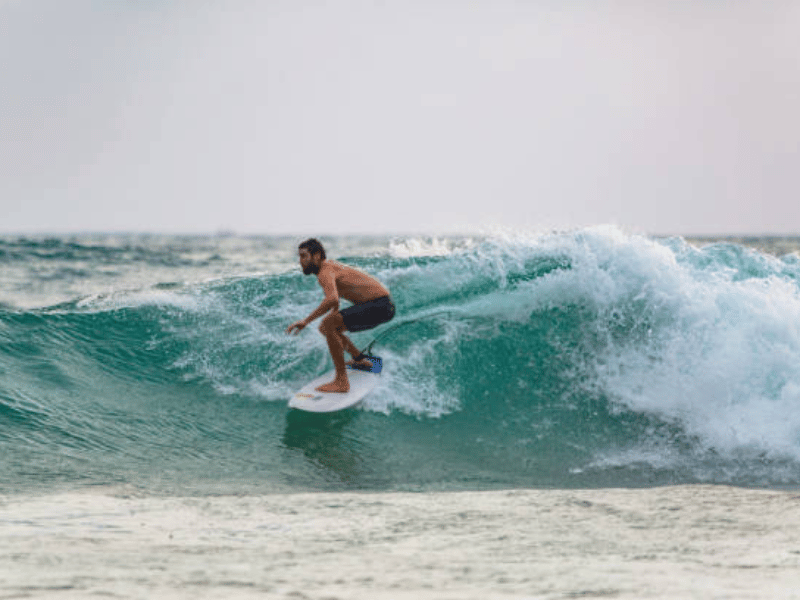
- Hikkaduwa: the coast’s most established surf town, and home to Main Reef, a consistent left-and-right reef break that suits intermediate surfers well. January is the season’s peak, powerful and crowded. February holds much of that same strength with noticeably fewer people in the water, which makes it the better window for stepping up your reef-break skills without the January crowds.
The water sits at a constant 27 to 29°C through the season, so a wetsuit never enters the conversation. Our guide to Sri Lanka’s south coast beaches covers what else the coast offers beyond the breaks themselves.
When Is the Best Time to Surf Arugam Bay?
Arugam Bay is the reason serious surfers plan a trip to Sri Lanka’s east coast at all. Main Point is a long right-hand point break that can run for several hundred metres on a good day, holding size up to 6 to 8 feet under the right swell. It’s a wall that keeps giving section after section rather than closing out, which is exactly what makes it genuinely advanced terrain rather than just a big wave.
The east coast surf season runs roughly April or May through October, with July and August delivering the biggest, most consistent swell. That’s also when Main Point is at its most crowded, with multiple independent reports describing well over 40 surfers in the water on a good day during peak season, enough that finding a clean set unclaimed takes patience as much as skill.
- Whiskey Point: close enough to walk or take a short tuk-tuk ride, with its own surf resort attached if you want to base yourself there and surf daily rather than commuting to Main Point.
- Peanut Farm and Pottuvil Point: a similar wave to Main Point with a fraction of the crowd, worth the short trip on any day Main Point feels oversubscribed.
- Okanda: further south again, for anyone willing to travel a little further for a genuinely quiet session.
When Is the Best Time to Surf Sri Lanka Without the Peak-Season Crowds?
For travellers weighing up the best time for beach tours in Sri Lanka against the best time to actually surf, the shoulder months are worth a closer look. They trade a little wave size for a crowd that’s a fraction of peak season.
- April, May and October: sit at the edges of both seasons, and deserve more consideration than most surf guides give them.
- May and June on the east coast: strong enough swell, well ahead of the July and August numbers.
- February on the south coast: holds much of January’s strength with noticeably fewer people in the water.
Occasionally the shoulder months line up well enough that both coasts hold surf at once, though this depends on local wind and swell each year rather than being something to plan around reliably.
Surfboard and Gear for Surfing in Sri Lanka
Rental covers most needs on both coasts, though a few situations call for planning ahead.
- Rental: easy on both coasts, with shops in Weligama, Ahangama, Hikkaduwa and Arugam Bay stocking a decent range of shortboards and a few step-up boards for bigger Main Point days.
- Bringing your own board still makes sense if you’re particular about your quiver or plan to surf both coasts, since rental stock thins out fast in peak weeks.
- A step-up board is worth having access to for Main Point in July and August specifically, when the swell regularly outgrows a standard shortboard.
- Reef boots aren’t essential on the sand-bottomed beach breaks, but they’re a sensible addition for the reef set-ups at Ahangama, Midigama and Hikkaduwa.
Which Sri Lanka Surf Destination Is Right for Your Skill Level?
The right month and coast depend less on the calendar and more on what you’re actually chasing.
- Solid intermediate, want the best wave-to-crowd ratio? February on the south coast or May and June on the east coast both deliver clean, workable conditions without peak-season numbers in the water.
- Advanced and chasing size? July or August at Arugam Bay Main Point is the specific window, accepting the crowd that comes with it.
- Advanced but crowd-averse? February at Hikkaduwa Main Reef holds much of January’s strength with noticeably fewer people in the water.
- Want to surf both coasts in one trip? Build the trip around a shoulder month and treat any overlap as a bonus, not the plan itself.
How Does Walkers Tours Plan a Sri Lanka Surf Itinerary?
At Walkers Tours, we plan the coast switch around road conditions, current swell and the rest of your Sri Lanka trip, not just the calendar.
- Transfer time: six to seven hours by road between the south and east coasts, timed so you’re not arriving exhausted for a dawn session.
- Conditions check: current swell reports and live surf forecasts checked against the seasonal pattern before the route is set.
- Board handling: built into the transfer itself, not left as an afterthought.
- Chauffeur-guided travel: turns the transfer into usable time, with stops built in rather than a straight drive.
- Wider itinerary: surf days connect naturally with the rest of Sri Lanka. Our Venture Further itinerary pairs south coast surfing with hill country and wildlife legs, rather than treating surf as the whole trip.
Plan Your Sri Lanka Surf Trip With Walkers Tours
Surfing is only one part of the journey. Getting the right coast, the right timing and the transfers around it is what makes a surf trip actually work, and it’s the part a generic surf guide can’t help you with.
Tell us which coast, which month and which level you’re surfing at, and we’ll build the transfers and the rest of the trip around it. Start planning your Sri Lanka surf trip with a team that treats board logistics and swell timing as part of the itinerary, not an afterthought.
FAQ
Which Sri Lanka Surf Break Suits Advanced Surfers?
Arugam Bay Main Point is the standout for size and length, especially in July and August, when a step-up board is worth having on hand. Hikkaduwa Main Reef is the strongest south coast option, holding much of its January peak strength through February with noticeably fewer crowds.
When Is Arugam Bay Least Crowded?
May and June, the build-up to peak season, hold decent swell well ahead of the July and August crowd at Main Point. October, as the season tails off, offers a similar trade-off at the other end. If Main Point itself is busy on any given day, Peanut Farm or Pottuvil Point usually solve the problem within a short tuk-tuk ride.
Can You Surf Both Coasts in One Sri Lanka Trip?
Yes, though not usually at the same time. Most trips are built around one coast’s main season, with a shoulder month sometimes allowing a taste of the other. The road transfer between coasts takes six to seven hours, so it’s a deliberate leg of the trip, not a quick hop. Walkers Tours builds this transfer around current conditions rather than a fixed pickup slot.
What Should You Look for in a Trusted Sri Lanka Beach Tour Operator?
Ask how they handle board transport and timing around swell, not just hotel bookings. An operator who treats surf logistics as part of the itinerary, rather than an add-on to a beach holiday, is usually the one worth booking with. Walkers Tours checks current swell and forecast conditions against the season before finalising a route, rather than working from a fixed template.
Is a Guided Beach and Surf Tour Worth It for Experienced Surfers?
For the surfing itself, not necessarily, most intermediate and advanced surfers can find breaks independently. Where a guided tour earns its place is the logistics: transfers between coasts, board handling, and fitting serious surf time around the rest of a Sri Lanka trip. This is where Walkers Tours’ chauffeur-guided travel and tailor-made itineraries add value beyond what a surf camp alone can offer.