How Many Days Do You Need for a Ramayana Tour in Sri Lanka? Complete Guide (2026/2027)
Culture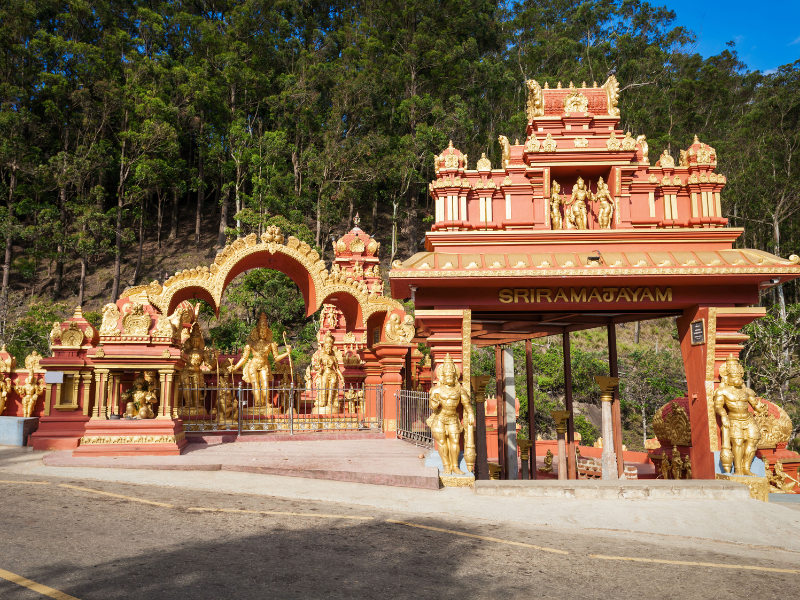
Sri Lanka’s Ramayana Trail includes sacred sites associated with the ancient epic, including the Seeta Amman Temple, Ashoka Vatika, Divurumpola, Munneshwaram Kovil, and the Sri Bhaktha Hanuman Temple. Most travellers need 5 to 8 days to comfortably experience the main Ramayana sites, because they are spread across western, central, hill country, and southern Sri Lanka. Walkers Tours operates three curated Ramayana itineraries of 5, 7, and 10 days, with the longest adding Kataragama, Galle, the Cultural Triangle, and Koneshwaram Temple in Trincomalee.
Quick Summary
- Most Ramayana tours require 5 to 8 days; 7 days is the most comfortable pace
- Key sites span four regions: the west coast, Kandy, the hill country, and the south
- Route planning matters, since sites sit hours apart on winding mountain roads
- The trail pairs naturally with tea country, heritage cities, and beach stays
- Walkers Tours offers Ramayana Tour 01 (5 days), Tour 02 (7 days), and Tour 03 (10 days)
The assumption that catches most pilgrims out: because Sri Lanka looks small on a map, the Ramayana sites must be close together.
They are not. The trail begins at Munneshwaram Kovil near Chilaw on the west coast, climbs to Kandy, winds up into the hill country around Nuwara Eliya where the most significant Sita sites cluster, and on longer routes reaches the southern coast and even Trincomalee in the east. Between those points sit mountain roads where 80 kilometres can take three hours.
That is why how many days do I need? is the right first question. This guide answers it properly: what the trail includes, how long each region takes, and which of the three Walkers Tours Ramayana itineraries fits your trip.
What Is the Ramayana Trail?
The Ramayana Trail is a route connecting locations across Sri Lanka associated with events from the Ramayana, the Sanskrit epic recounting Rama’s journey to rescue his wife Sita from Ravana, the king of Lanka. According to tradition, Sita was held captive on the island, Hanuman leapt across the sea in search of her, and several turning points of the epic unfolded here.
For Hindu travellers, the trail is a pilgrimage: temples such as Seeta Amman and Munneshwaram remain active places of worship. For everyone else, it is a remarkable way to see Sri Lanka, because the sites happen to sit in some of the island’s most beautiful landscapes: tea covered mountains, sacred rivers, and coastline.
10 Major Ramayana Sites in Sri Lanka to Visit on your Tour
These are the sites featured across Walkers Tours’ Ramayana itineraries, roughly in the order the trail visits them.
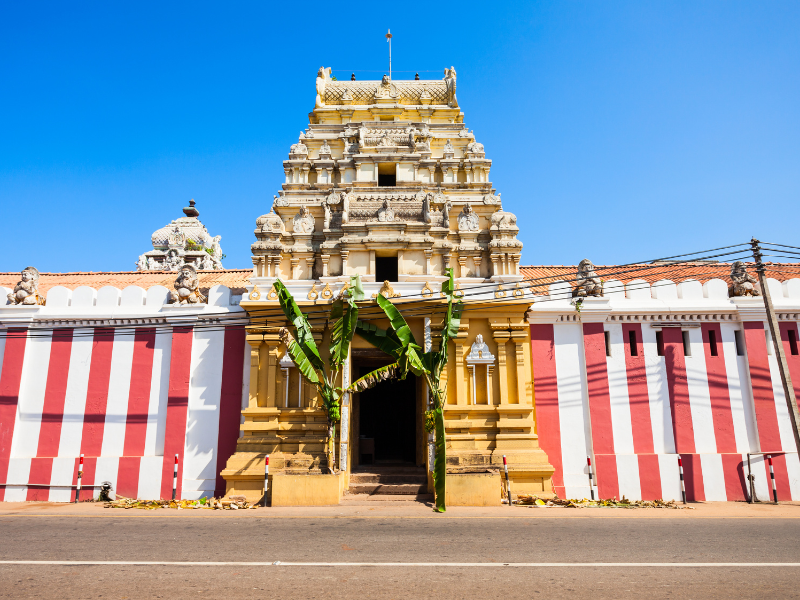
Munneshwaram Kovil (Chilaw)
One of the island’s oldest Shiva temples, where Rama is believed to have prayed for release from the sin of killing Ravana. It sits about two hours north of Colombo and opens every Walkers Ramayana tour, whichever duration you choose.
Sri Bhaktha Hanuman Temple (Ramboda, en route to Nuwara Eliya)
Perched on the mountainside between Kandy and Nuwara Eliya, this temple honours Hanuman’s search for Sita in these hills. Its towering granite Hanuman statue and valley views make it a natural stop on the climb into tea country, and the drive passes working tea plantations where all three itineraries pause for a visit.
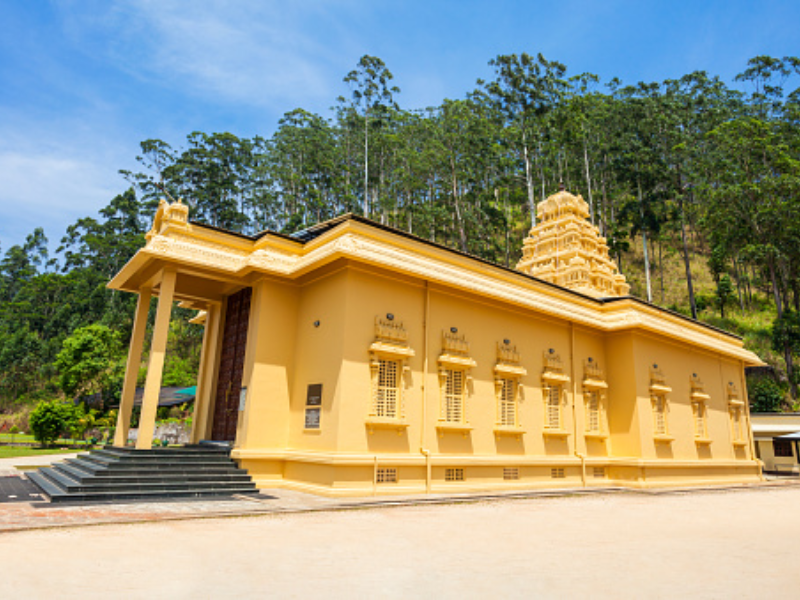
Seeta Amman Temple (Sita Eliya, Nuwara Eliya)
Believed to mark the spot where Sita was held captive and prayed for Rama’s arrival, with circular depressions in the streambed said to be Hanuman’s footprints. This is the emotional centre of the trail and one of very few temples in the world dedicated to Sita. It appears on every Walkers Ramayana tour.
Ashoka Vatika (Hakgala, near Nuwara Eliya)
The garden where Ravana is said to have kept Sita after she refused to remain in his palace. Today it adjoins the cool climate Hakgala gardens, about 25 minutes from Seeta Amman Temple. Featured on the 7 and 10 day itineraries.
Gayathri Peedam (Nuwara Eliya)
A serene temple associated with penance and blessings in the epic tradition, and a quiet counterpoint to the busier Sita Eliya sites. Included on the 7 and 10 day tours.
Divurumpola (between Nuwara Eliya and Ella)
Held to be where Sita underwent her trial by fire to prove her purity. It remains a working temple where locals still make sworn oaths, a practice tied directly to the legend. Roughly an hour from Nuwara Eliya, and part of the 7 and 10 day itineraries.
Panchamuga Anjaneyar Temple and Kelaniya Rajamaha Temple (Colombo)
The Panchamuga Anjaneyar Temple houses a striking five faced Hanuman, while Kelaniya is associated with Vibhishana, Ravana’s brother, who was crowned after the war. Both fit into a single Colombo day and close every Walkers Ramayana tour.
Roomassala Temple (Unawatuna)
A coastal hill said to be a fragment of the Himalayan mountain Hanuman carried when sent to fetch healing herbs, which explains its unusual plant life. The 7 and 10 day tours reach it on the southern leg.
Kataragama Temple (Kataragama)
A revered multi faith pilgrimage town in the deep south, woven into the island’s sacred geography and visited on the 10 day grand circuit.
Koneshwaram Temple (Trincomalee)
A dramatic cliff top Shiva temple on the east coast, linked in tradition to Ravana’s devotion. Spectacular, but a long drive from everything else on the trail, which is why it appears only on the 10 day itinerary.
Ramayana Sites at a Glance
| Site | Associated Story | Region |
| Munneshwaram Kovil | Rama’s atonement after the war | Chilaw (west coast) |
| Sri Bhaktha Hanuman Temple | Hanuman’s search for Sita | Ramboda (hill country) |
| Seeta Amman Temple | Sita’s captivity and prayers | Nuwara Eliya |
| Ashoka Vatika | Sita’s garden captivity | Nuwara Eliya |
| Gayathri Peedam | Penance and blessings | Nuwara Eliya |
| Divurumpola | Sita’s trial by fire | Nuwara Eliya to Ella road |
| Panchamuga Anjaneyar Temple | Five faced Hanuman worship | Colombo |
| Kelaniya Rajamaha Temple | Vibhishana’s coronation | Colombo |
| Roomassala Temple | Hanuman’s herb mountain | Unawatuna (south) |
| Kataragama Temple | Sacred southern pilgrimage | Kataragama |
| Koneshwaram Temple | Ravana’s devotion to Shiva | Trincomalee (east) |
How Many Days Do You Need, and When Should You Go?
Most travellers need 5 to 8 days for a Ramayana tour of Sri Lanka, and December to April is the best time to go.
- 5 days covers the essential trail
Five days fits the core circuit comfortably: Munneshwaram Kovil at Chilaw, an overnight in Kandy, the Sri Bhaktha Hanuman Temple and a tea plantation on the climb to Nuwara Eliya, the Seeta Amman Temple, and Colombo’s Panchamuga Anjaneyar and Kelaniya temples on the way back. This is exactly the route of Walkers Tours’ Ramayana Tour 01, 4 nights and 5 days. - 7 days is the most popular choice
A week keeps the same spine and adds the deeper Sita sites around Nuwara Eliya: Ashoka Vatika, Gayathri Peedam, and Divurumpola, before continuing south to Roomassala Temple near Unawatuna and a restful night at Bentota on the coast. This is Walkers Tours’ Ramayana Tour 02, 6 nights and 7 days, and it is the itinerary most first time pilgrims choose. - 10 days is the complete pilgrimage
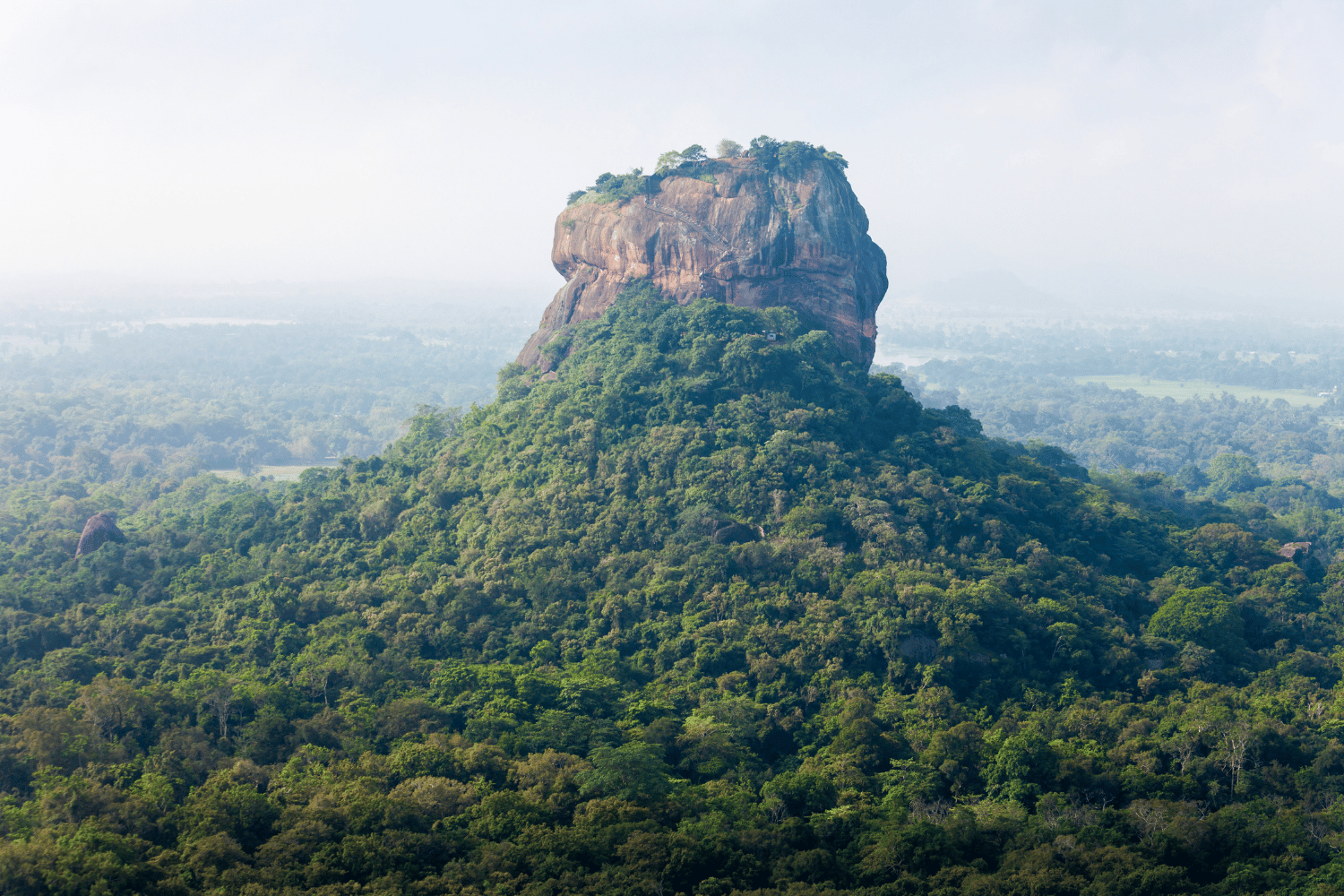
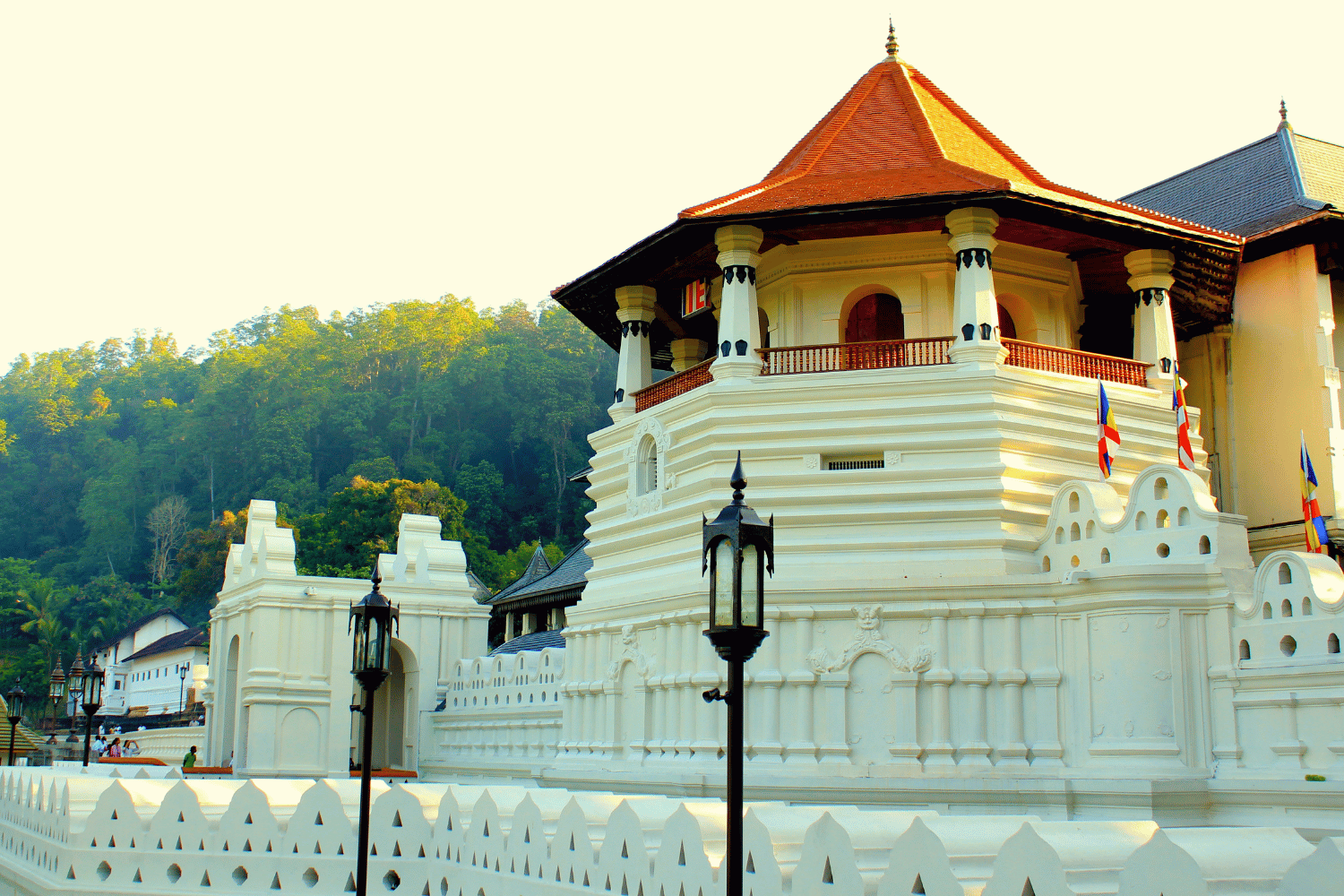
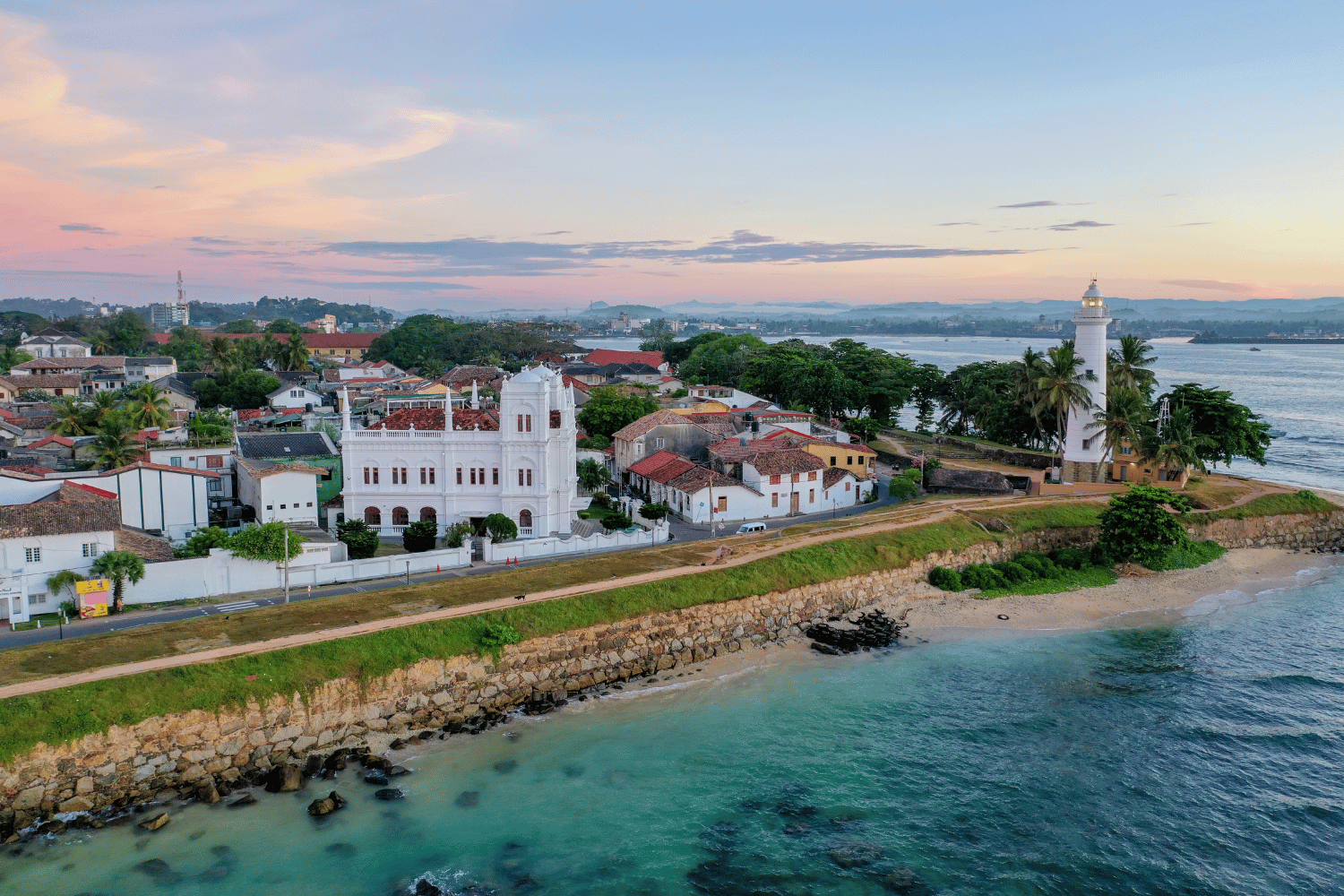
Ten days is the only realistic way to include Koneshwaram Temple in Trincomalee alongside the rest of the trail. Walkers Tours’ Ramayana Tour 03, 9 nights and 10 days, also brings in Kandy’s Temple of the Tooth Relic, the Dambulla Cave Temple and Sigiriya in the Cultural Triangle, Ella in the hills, Kataragama in the south, and Galle on the coast, so the pilgrimage doubles as a full tour of Sri Lanka.
Best time for a Ramayana tour:
- December to April: ideal weather for the 5 and 7 day tours, covering the west coast, hill country, and south
- February to April: best window for the 10 day tour, as Trincomalee on the east coast is also usually dry
- March or April (Rama Navami): special pujas at temples along the trail; book early for the festival period
- May to September: the trail stays open, with short afternoon showers easily planned around
- Any month: pack a warm layer for Nuwara Eliya, where nights drop close to 10 degrees Celsius
Can You Combine the Ramayana Trail with Other Experiences?
Easily, because the trail already passes through Sri Lanka’s best scenery. Every Walkers Tours Ramayana itinerary includes a tea plantation visit on the climb into the hills. The 10 day route takes in the Cultural Triangle’s heritage highlights, Sigiriya and the Dambulla Cave Temple, along with the Temple of the Tooth Relic in Kandy and the ramparts of Galle.
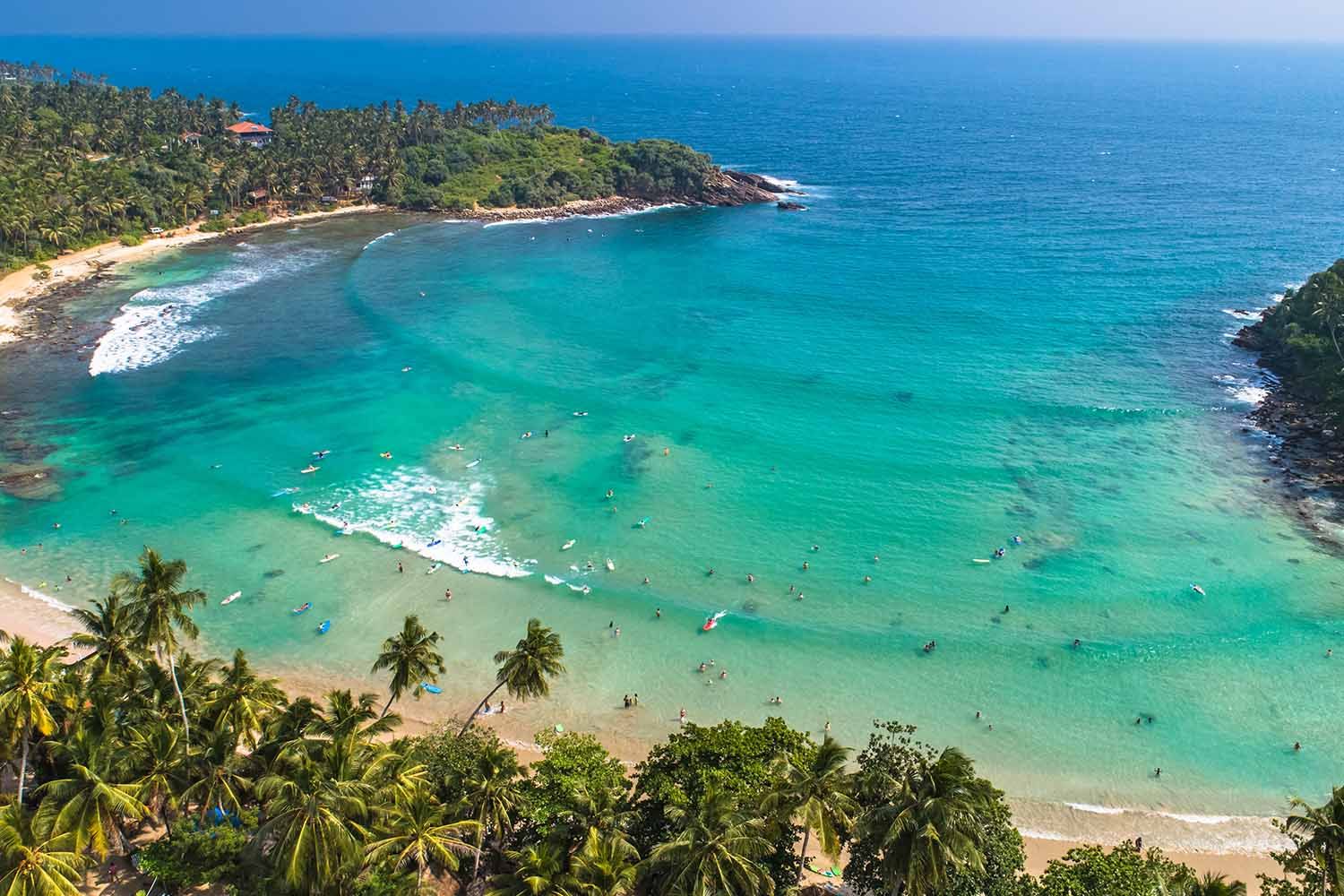
And both longer tours end with time at Bentota, because two nights on the beach has become the standard way to finish a pilgrimage rested rather than road weary.
How Walkers Tours Plans Ramayana Journeys
Walkers Tours itineraries are built around three things pilgrims consistently ask for: correct sequencing so no mountain road is driven twice, guides who know both the epic and the island, and timings that bring you to major temples during worship hours rather than between them. All three itineraries can be adjusted for families, senior travellers, and groups, and travellers who want something fully bespoke can extend any of them.
Planning Tips
Temple etiquette is simple but important: shoulders and knees covered, shoes off at entrances, and photography rules vary by temple, so ask first. Carry small notes for offerings.
The hill country is genuinely cool, so pack a warm layer for Nuwara Eliya evenings. Weather wise, December to April suits the classic western and southern route best; check our month by month guide if your dates are fixed. And if you are weighing the trail against a broader holiday, our comparison of 7 day vs 14 day Sri Lanka tours helps you decide how much island to add around the pilgrimage.
FAQ
How many Ramayana sites are there in Sri Lanka?
Dozens of locations across Sri Lanka are linked to the Ramayana. Organised tours focus on the most significant, including the Seeta Amman Temple, Ashoka Vatika, Divurumpola, Munneshwaram Kovil, the Sri Bhaktha Hanuman Temple, Roomassala, and Koneshwaram Temple in Trincomalee.
Is 5 days enough for a Ramayana tour?
Yes, for the essential circuit. Five days comfortably covers Munneshwaram Kovil at Chilaw, Kandy, the Sri Bhaktha Hanuman Temple, the Seeta Amman Temple in Nuwara Eliya, and Colombo’s Ramayana temples. You will need 7 days to add Divurumpola, Ashoka Vatika, and the southern coast, and 10 days to include Trincomalee.
Which is the most important Ramayana site in Sri Lanka?
The Seeta Amman Temple at Sita Eliya is widely regarded as the trail’s most significant site, believed to mark where Sita was held captive. It is one of very few temples in the world dedicated to Sita, and the stream beside it is associated with Hanuman’s footprints.
Can I combine a Ramayana tour with general sightseeing?
Yes. The trail naturally passes tea plantations and the hill country, and the 10 day Walkers itinerary adds Kandy’s Temple of the Tooth Relic, Sigiriya, the Dambulla Cave Temple, Kataragama, Galle, and beach time at Bentota, so the pilgrimage doubles as a complete tour of Sri Lanka.
When is the best time for a Ramayana tour in Sri Lanka?
December to April offers the most reliable weather across the western, central, and southern regions where most sites sit. The trail operates year round, however, and the hill country temples remain accessible in every season with sensible planning around afternoon rain.
Conclusion
However many days you choose, the Ramayana Trail rewards unhurried travel: these are living temples in extraordinary landscapes, not boxes to tick. Give the hill country the time it deserves, follow a sensibly sequenced route, and the pilgrimage takes care of the rest.
Ready to walk the trail? Contact our team to tailor an itinerary around your dates.